Some beaches have wildlife.
Cape May hosts migration traffic.
Because something extraordinary happens here every year.
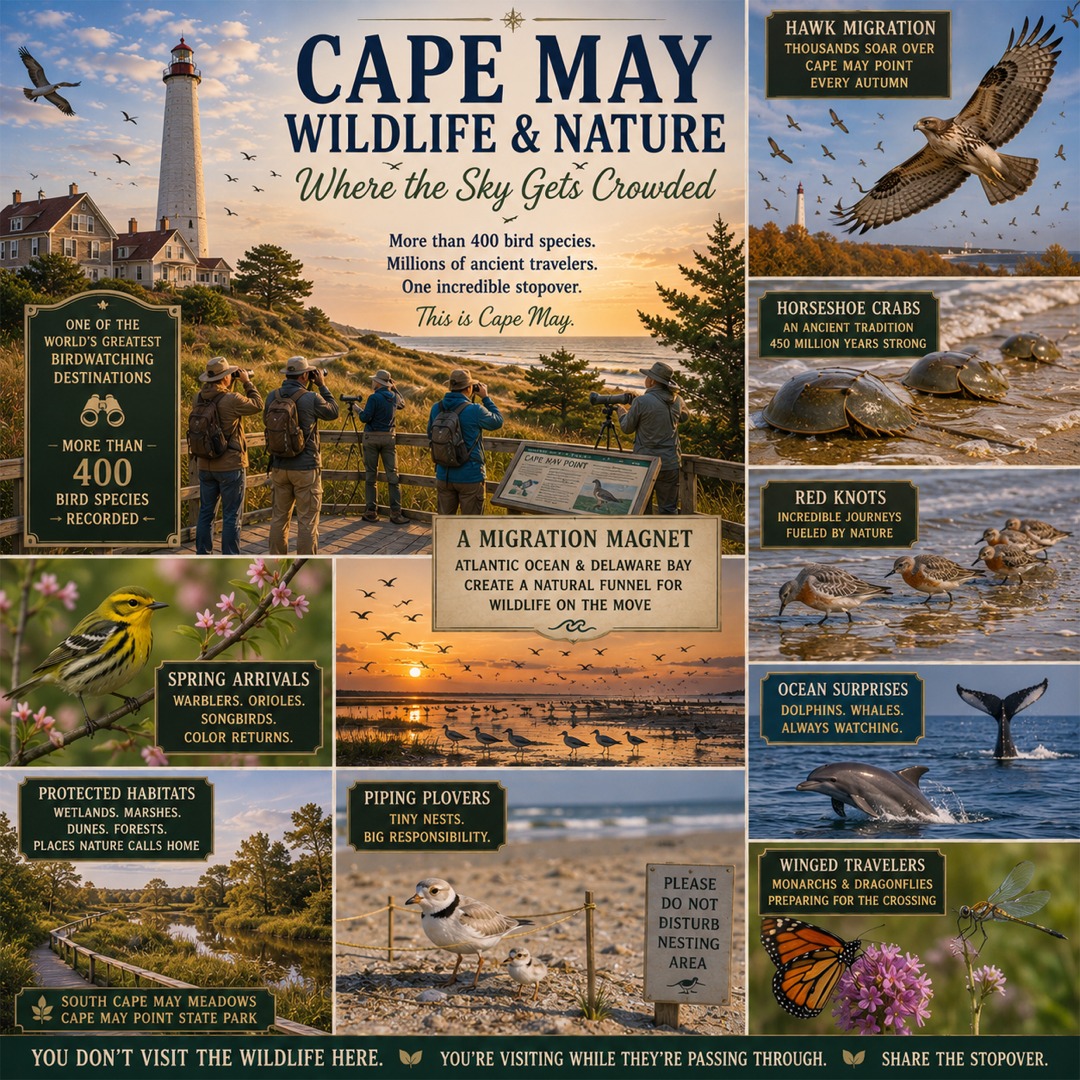
The southern tip of Cape May acts like a giant natural funnel where the Atlantic Ocean and Delaware Bay squeeze together, creating one of the greatest wildlife gathering spots anywhere in North America.
Translation?
Animals basically use Cape May as a rest stop.
And they arrive in huge numbers.
Look up during migration season and the sky starts feeling busy.
Really busy.
More than 400 bird species have been recorded here, earning Cape May worldwide recognition as one of the planet’s greatest birdwatching destinations.
Birdwatchers arrive carrying binoculars and giant cameras while casually saying things like:
“Did you see the peregrine?”
“The merlins came through this morning.”
“Osprey activity looks good today.”
To everybody else, this sounds slightly mysterious.
To bird people?
This is playoff season.
Cape May Point becomes especially famous during autumn hawk migration, when eagles, falcons, hawks, and osprey stream overhead by the thousands.
Then spring arrives and suddenly warblers, orioles, and colorful songbirds begin pouring into local trees and dunes after exhausting journeys across the water.
And then things somehow get even stranger.
Because every late spring, Delaware Bay hosts one of nature’s oldest annual gatherings.
Thousands of horseshoe crabs crawl onto beaches beneath moonlit tides to lay millions of eggs.
Horseshoe crabs aren’t just old.
They’re prehistorically old.
These creatures were hanging around roughly 450 million years ago.
Dinosaurs eventually showed up and disappeared.
Horseshoe crabs basically shrugged and kept going.
Then migrating shorebirds arrive.
Especially Red Knots, tiny travelers that fly incredible distances from South America toward Arctic nesting grounds.
They stop here for one reason:
Food.
Timing is everything.
The birds feast on horseshoe crab eggs, refuel, and continue one of the most remarkable migrations on Earth.
And if you’re staring toward the ocean instead of the sky, Cape May keeps delivering surprises.
Bottlenose dolphins frequently swim right beyond the waves.
Humpback whales occasionally appear offshore.
Piping plovers carefully nest on protected beaches.
Monarch butterflies and dragonflies gather before making risky journeys across the Delaware Bay.
Even the landscape feels alive.
Freshwater wetlands.
Marshes.
Maritime forests.
Dunes filled with grasses and rare plants.
Places like South Cape May Meadows and Cape May Point State Park protect these fragile habitats while letting visitors step quietly into them.
Maybe that’s Cape May’s nature secret.
You don’t really visit the wildlife here.
You’re visiting while they’re passing through.
And for a little while…
you get to share the stopover.