Some beaches have wildlife.
Sandy Hook feels like wildlife occasionally allows people to visit.
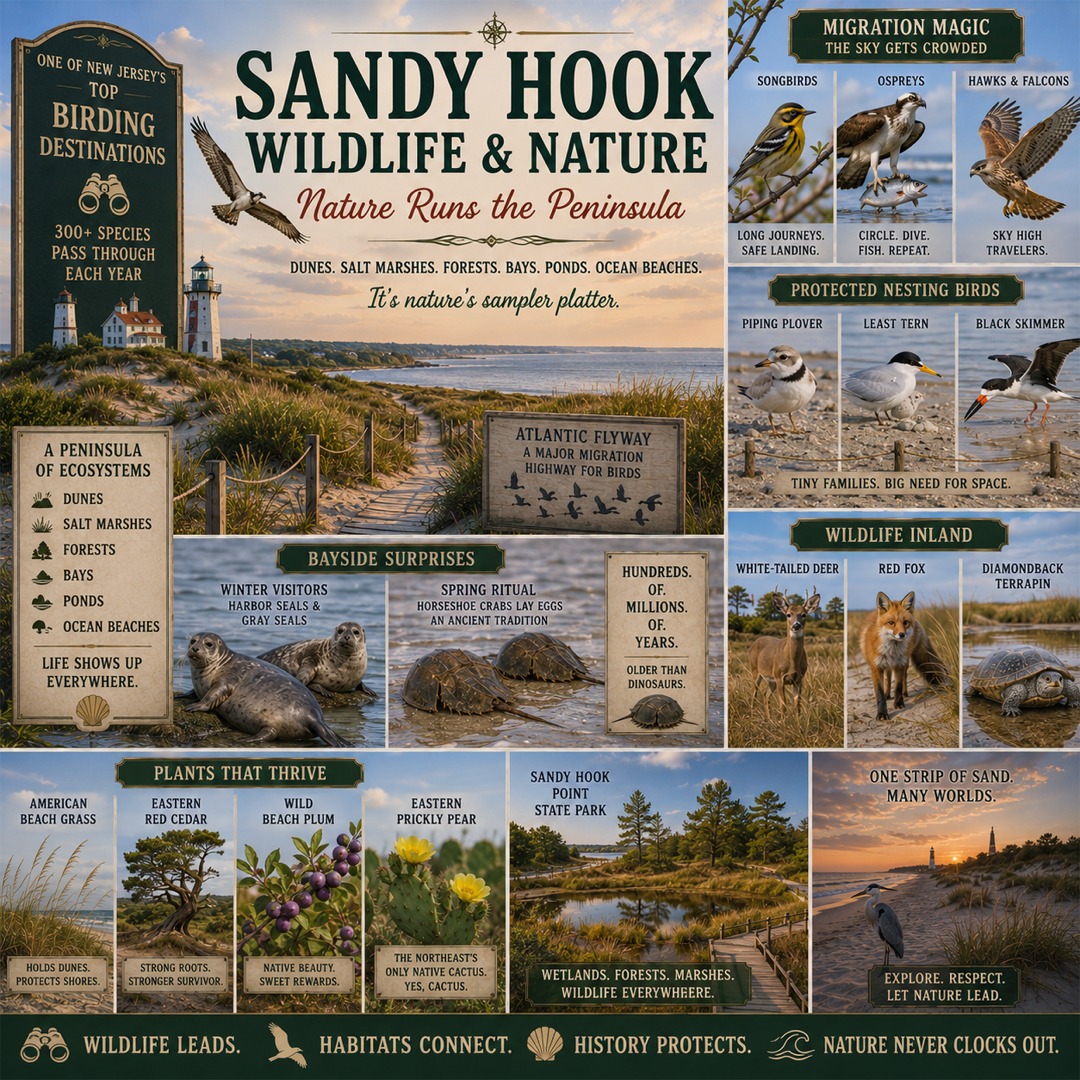
Because once you start exploring the peninsula, you realize this isn’t simply ocean and sand.
This place is a whole collection of ecosystems packed together into one long stretch of shoreline.
Dunes.
Salt marshes.
Forests.
Bays.
Ponds.
Ocean beaches.
It’s like nature built itself a sampler platter.
And because of that, life shows up everywhere.
Look up during spring or fall migration and suddenly the sky starts getting crowded.
Really crowded.
Sandy Hook sits directly along the Atlantic Flyway, making it one of New Jersey’s greatest birding destinations. More than 300 species pass through during migration seasons, turning the peninsula into a giant avian highway.
Songbirds pour into the maritime forest after long journeys.
Ospreys circle overhead hunting for fish.
Hawks and falcons stream across the sky.
And down along protected sections of beach, tiny Piping Plovers, Least Terns, and Black Skimmers quietly raise families inside carefully protected nesting zones.
For visitors unfamiliar with Piping Plovers, they often look like little wind-up toys sprinting across the sand.
Tiny legs.
Tiny footprints.
Maximum urgency.
Then there are the bayside surprises.
Because winter brings seals.
Actual seals.
Harbor Seals and Gray Seals sometimes appear lounging on rocks and sandbars near the shoreline looking remarkably unconcerned about human schedules.
Meanwhile spring delivers another prehistoric gathering.
Horseshoe crabs crawl onto bayside beaches to lay eggs, continuing a ritual that has been happening for hundreds of millions of years.
Hundreds.
Of.
Millions.
Of.
Years.
Dinosaurs eventually came and went.
Horseshoe crabs basically shrugged and kept walking.
And if you wander farther inland, things become even more unexpected.
White-tailed deer graze near Fort Hancock.
Red foxes slip through dunes and maritime woods.
Diamondback Terrapins emerge from marshes to lay eggs in warm sandy areas.
Then the plants start quietly stealing the show.
American beach grass grips shifting dunes together.
Eastern Red Cedars twist against salty winds.
Wild beach plums grow in protected areas.
And perhaps strangest of all…
cactus.
Yes.
Cactus.
The Eastern Prickly Pear, the Northeast’s only native cactus, somehow survives and blooms right here among the sand dunes.
Because apparently Sandy Hook wasn’t finished surprising us.
Maybe that’s Sandy Hook’s nature secret:
You don’t really feel like you’re walking through a beach town.
You feel like you’re walking through several worlds sharing the same strip of sand.