Walk through Cape May long enough and you begin to get the strange feeling that the town remembers things.
Not in a spooky way.
Okay…maybe a little spooky.
But mostly in the way old places seem to carry layers of stories beneath your feet.
Because before beach tags, souvenir shops, bicycles, and vacation rentals…people were already standing here centuries ago, looking out over the same water.
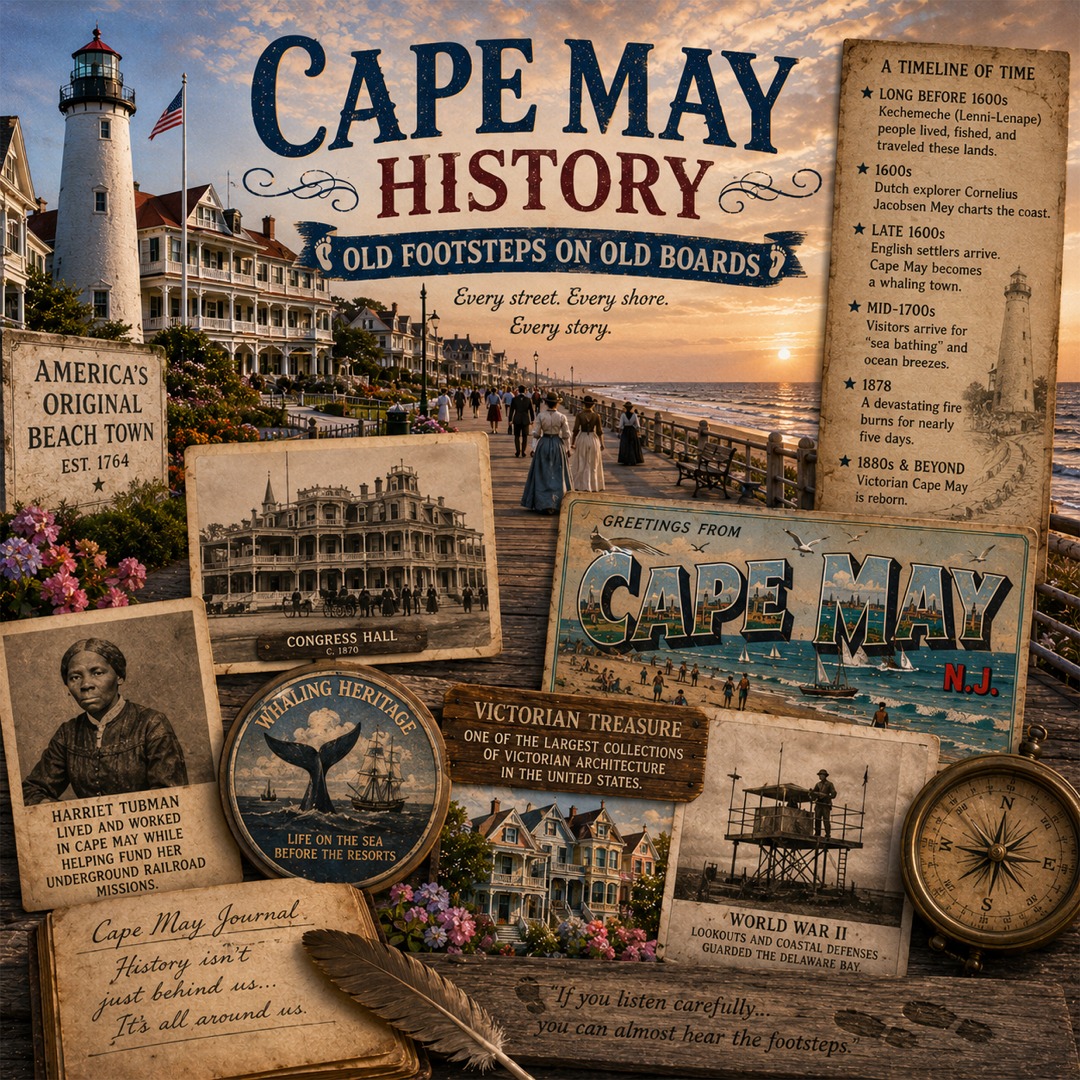
Long before Cape May became America’s Original Beach Town, the Kechemeche people, a subgroup of the Lenni-Lenape, lived throughout this peninsula. They hunted, fished, and moved with the rhythms of the land and water, understanding something people still come here to discover today:
Cape May sits at a crossroads.
Ocean and bay.
Land and water.
Arrival and departure.
Later, Dutch explorer Cornelius Jacobsen Mey charted the coast and eventually lent his name to the area. English settlers followed, and by the late 1600s Cape May had become something many people probably wouldn’t expect:
A whaling town.
That’s right.
Before beach umbrellas and frozen custard, residents here built lives around the sea through farming, fishing, and a booming whaling industry.
But then something changed.
People started arriving not for work…
But for escape.
By the mid-1700s wealthy visitors from Philadelphia and other cities traveled here seeking ocean breezes and “sea bathing,” which doctors at the time actually prescribed as healthy medicine.
Imagine your doctor saying:
“Take two ocean waves and call me in the morning.”
Honestly?
That might still work.
Cape May quickly transformed into America’s first seaside resort, earning a reputation as the “Queen of the Seaside Resorts.” Presidents vacationed here. Congress Hall became a summer gathering place for some of the most powerful people in the country. Wealthy families arrived seeking cooler temperatures and a little peace beside the ocean.
Then came disaster.
In 1878, a devastating fire burned through much of Cape May for nearly five days, destroying hotels and large sections of town.
For many places, that could have been the end of the story.
For Cape May, it became the beginning of a new chapter.
Residents rebuilt.
But they didn’t simply replace what was lost.
They transformed it.
Victorian homes with wraparound porches, decorative trim, towers, and colorful “Painted Lady” designs began rising across the town. Today, Cape May contains one of the largest collections of Victorian architecture in the country, making the entire city feel like a place where history decided to stay awhile.
And history kept arriving.
Harriet Tubman lived and worked here while helping fund her Underground Railroad missions. During World War II, lookout towers and coastal defenses rose along the shoreline to guard the Delaware Bay.
Cape May has worn many identities.
Native homeland.
Whaling village.
Presidential getaway.
Military outpost.
Victorian treasure.
Maybe that’s why walking through Cape May feels different.
Because every now and then you get the sense that someone else walked these same streets long before you did.
And if you listen carefully…
You can almost hear the footsteps.